12 Japanese Style Bedroom Ideas for Your Zen Sanctuary

I’ve always been drawn to the calm and balance of Japanese design. It’s more than just a look; it’s a feeling of peace and order that I wanted to bring into my own bedroom. This style, often called Japandi when blended with Scandinavian simplicity, focuses on natural materials, clean lines, and a sense of tranquility.
Creating a Japanese-inspired space isn’t about buying specific decor. It’s about embracing principles like wabi-sabi (finding beauty in imperfection) and ma (the thoughtful use of space). It’s perfect for turning a cluttered room into a restful retreat. Let me share my favorite ideas to help you craft your own serene escape.
1. Embrace the Tatami Mat Foundation
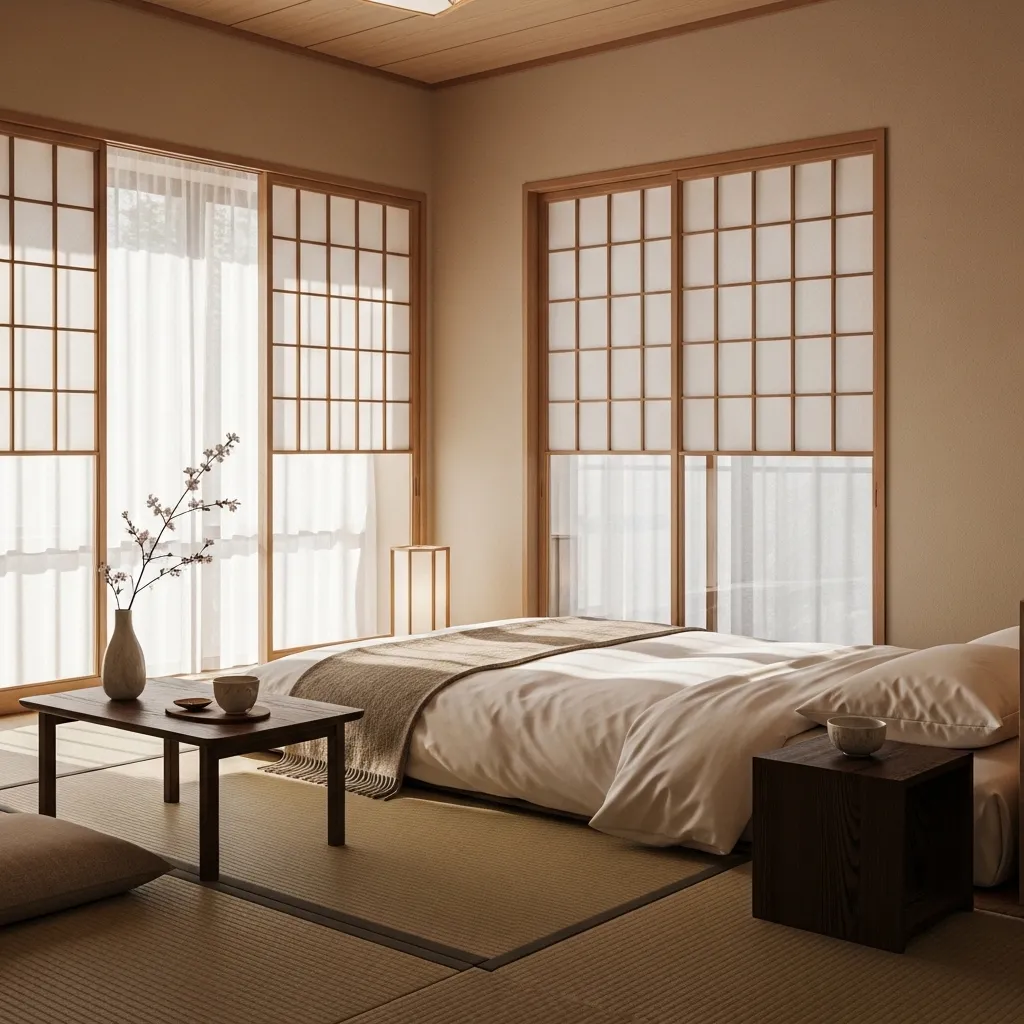
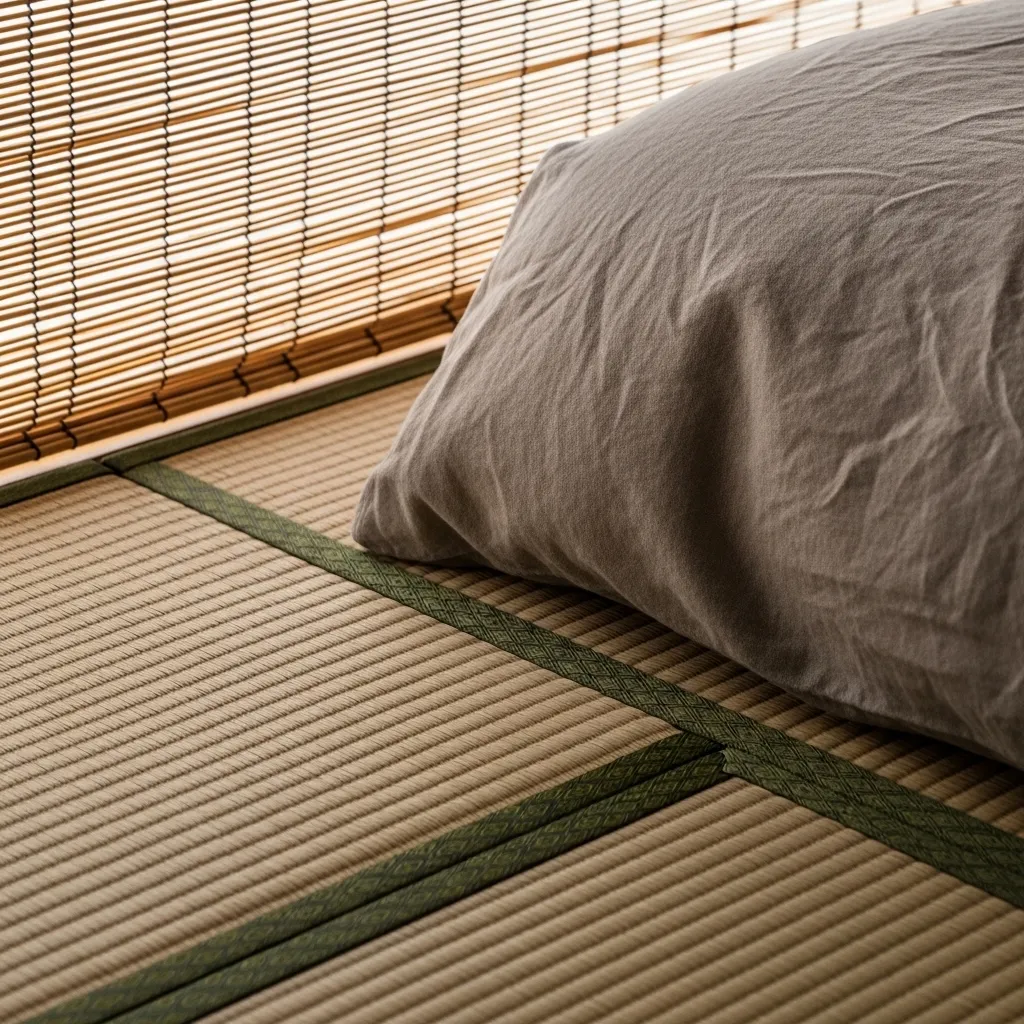
Nothing says “Japanese bedroom” like the feel of tatami underfoot. These traditional woven rush mats are soft, fragrant, and define the space. While a full tatami floor is a commitment, you can capture the essence.
I love using a large, low-profile tatami-style rug as the room’s anchor. It instantly creates that grounded, organic feel. Pair it with a simple futon or a platform bed placed directly on top to stay true to the low-to-the-ground aesthetic.
2. Opt for a Low-Profile Platform Bed
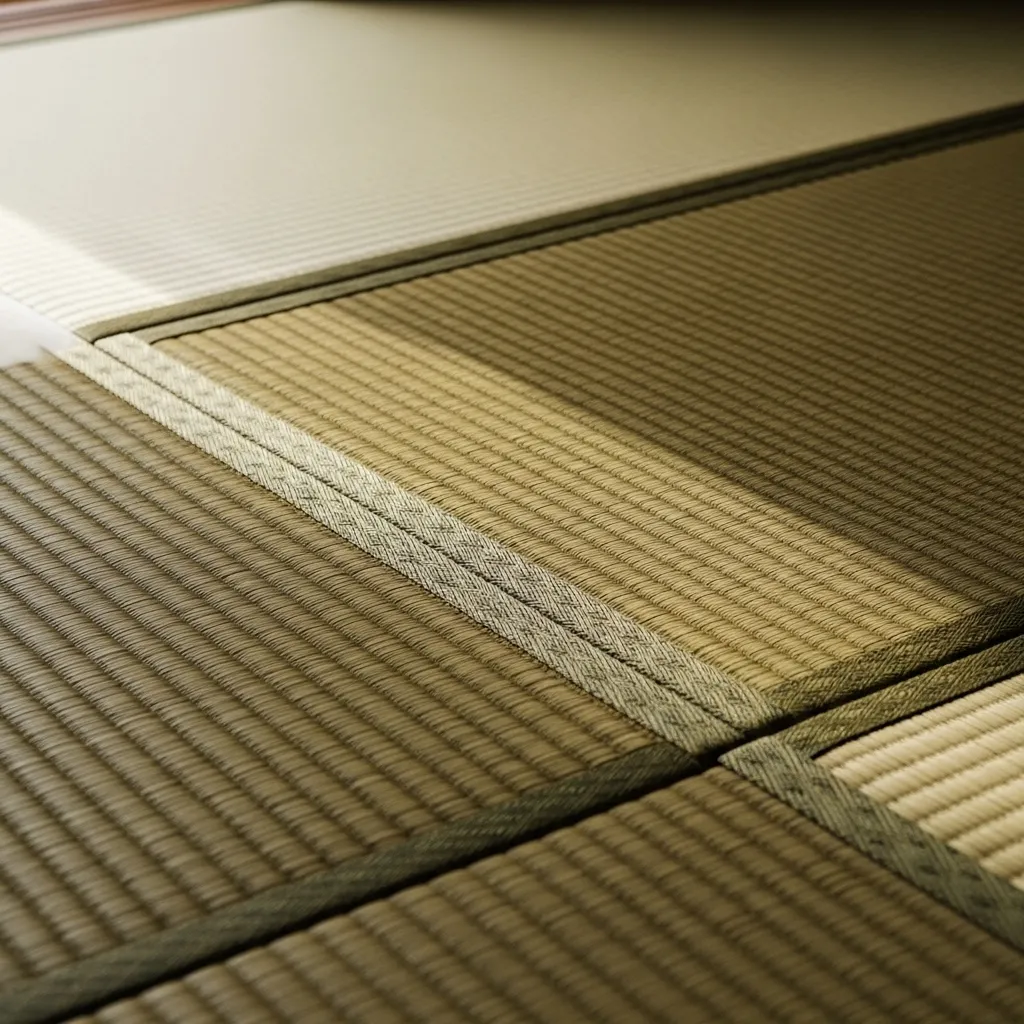
Ditch the bulky bed frame. A low wooden platform bed, or even just a shikibuton (a thin futon mattress) on the floor, is key. It brings you closer to the ground, fostering a sense of stability and simplicity.
Look for beds with clean, straight lines and hidden storage underneath. This keeps the visual clutter away and maximizes your space, which is a core principle of Japanese design. The wood grain adds natural warmth.
3. Incorporate Natural Wood Tones
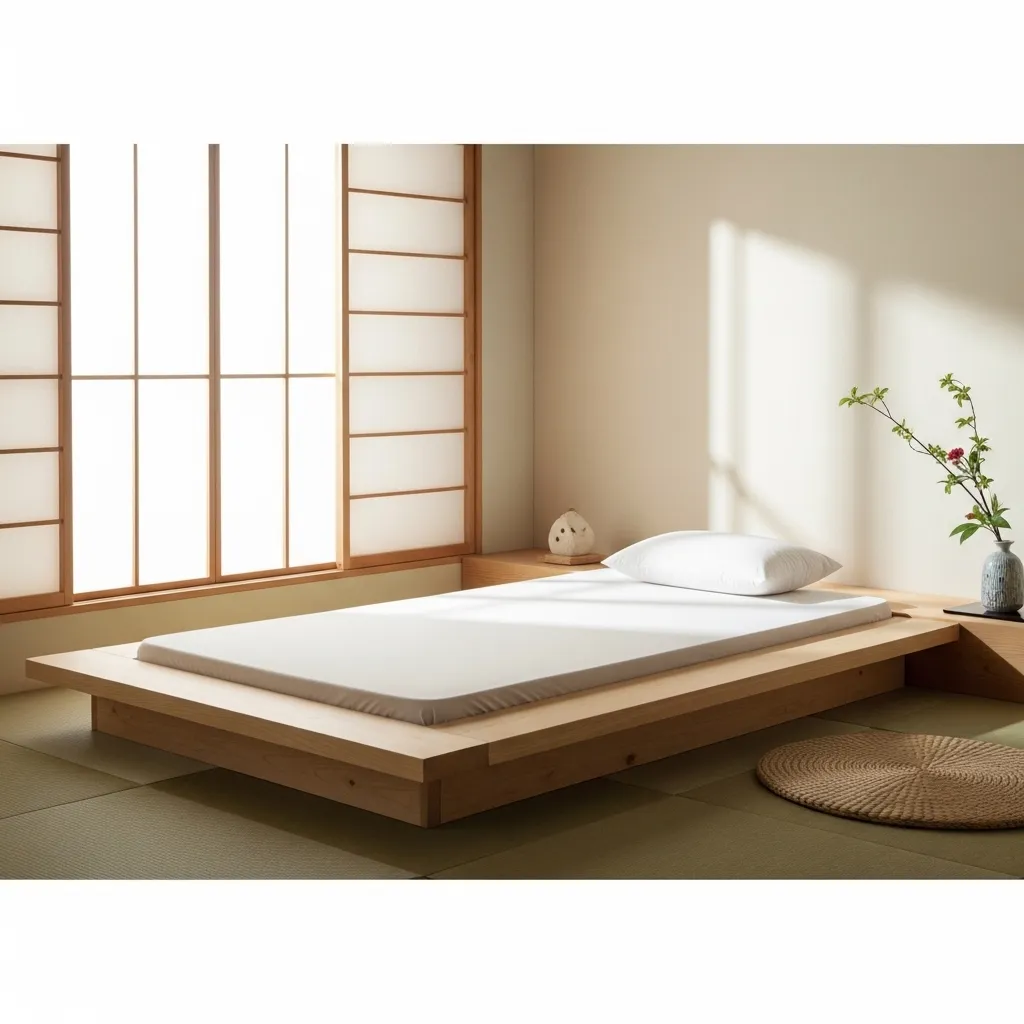
Wood is the soul of this style. I stick to light, warm tones like cedar, ash, or bamboo. It’s not just for furniture—think about wood for ceiling beams, window frames, or simple wall accents.
The goal is to see the wood’s natural grain and texture. Avoid high-gloss finishes. A matte or lightly oiled finish feels more authentic and brings the calming essence of nature right inside.
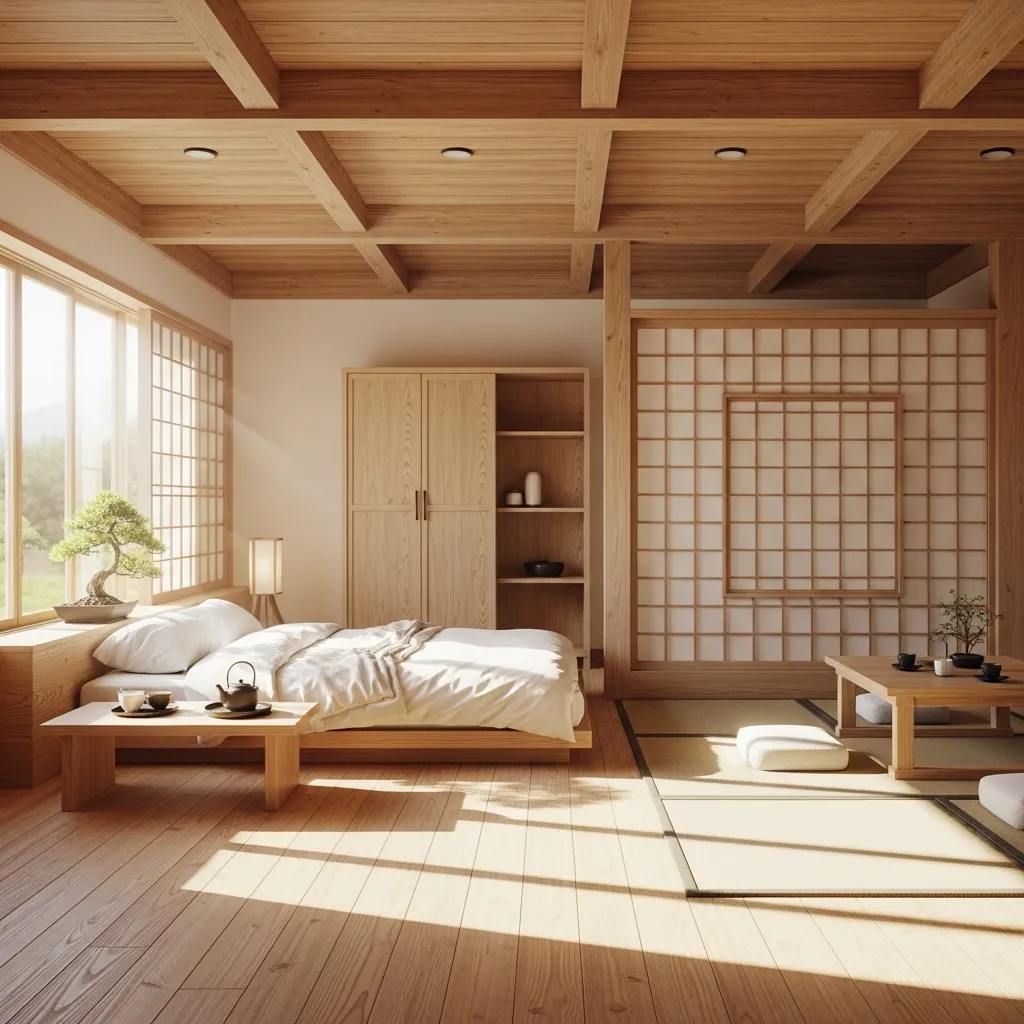
4. Master the Art of Minimalism
This is the most important step. A Japanese bedroom is clutter-free. I practice “less is more” by keeping only what I need and love. Surfaces are clear, and everything has a designated place.
- Use hidden storage like tansu chests or built-in closets.
- Choose a monochromatic or neutral color palette for bedding.
- Let the beauty of a few key pieces shine instead of many small decor items.
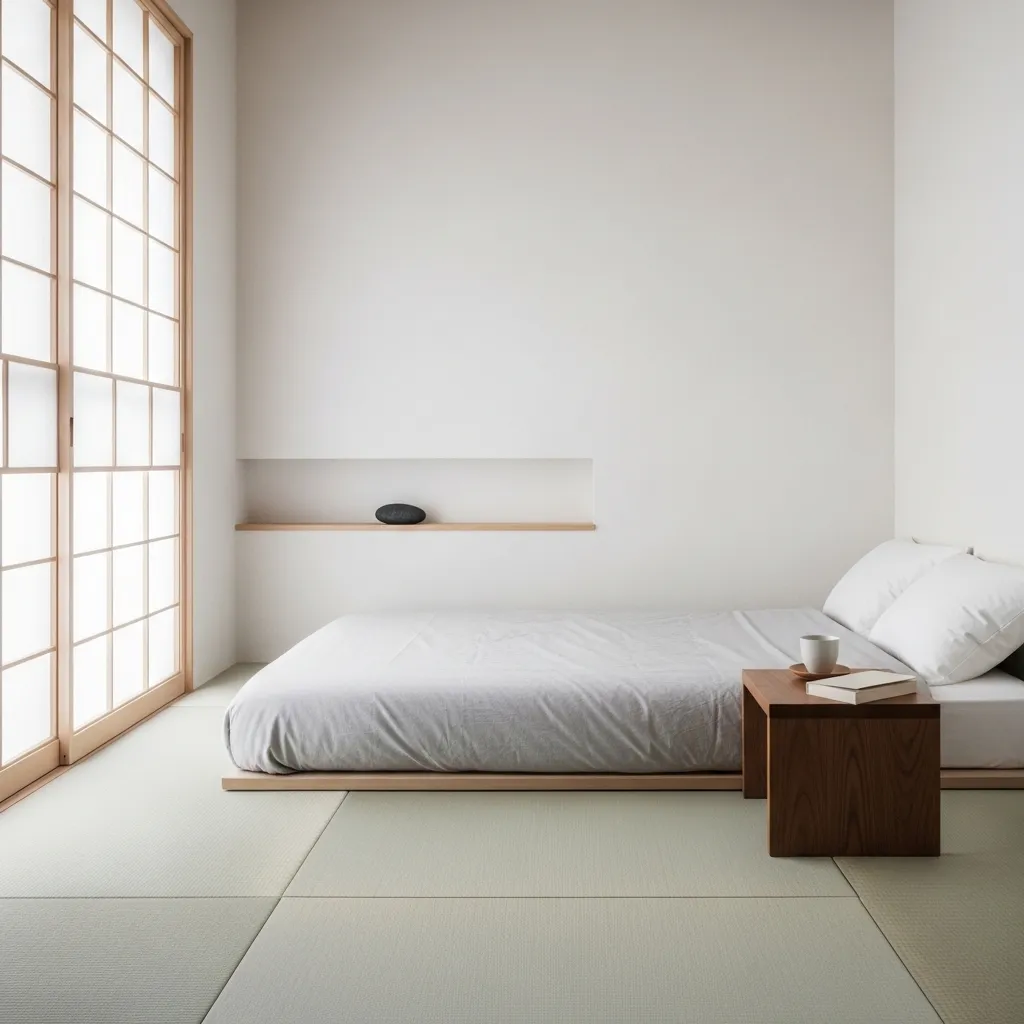
5. Use Shoji Screens for Light & Privacy
Shoji screens are my secret weapon. These translucent paper panels filter light beautifully, creating a soft, diffused glow. They work as room dividers, window coverings, or even closet doors.
If traditional shoji isn’t possible, look for modern interpretations with frosted glass or linen panels. They provide privacy while maintaining that beautiful, ethereal light quality that feels so peaceful.
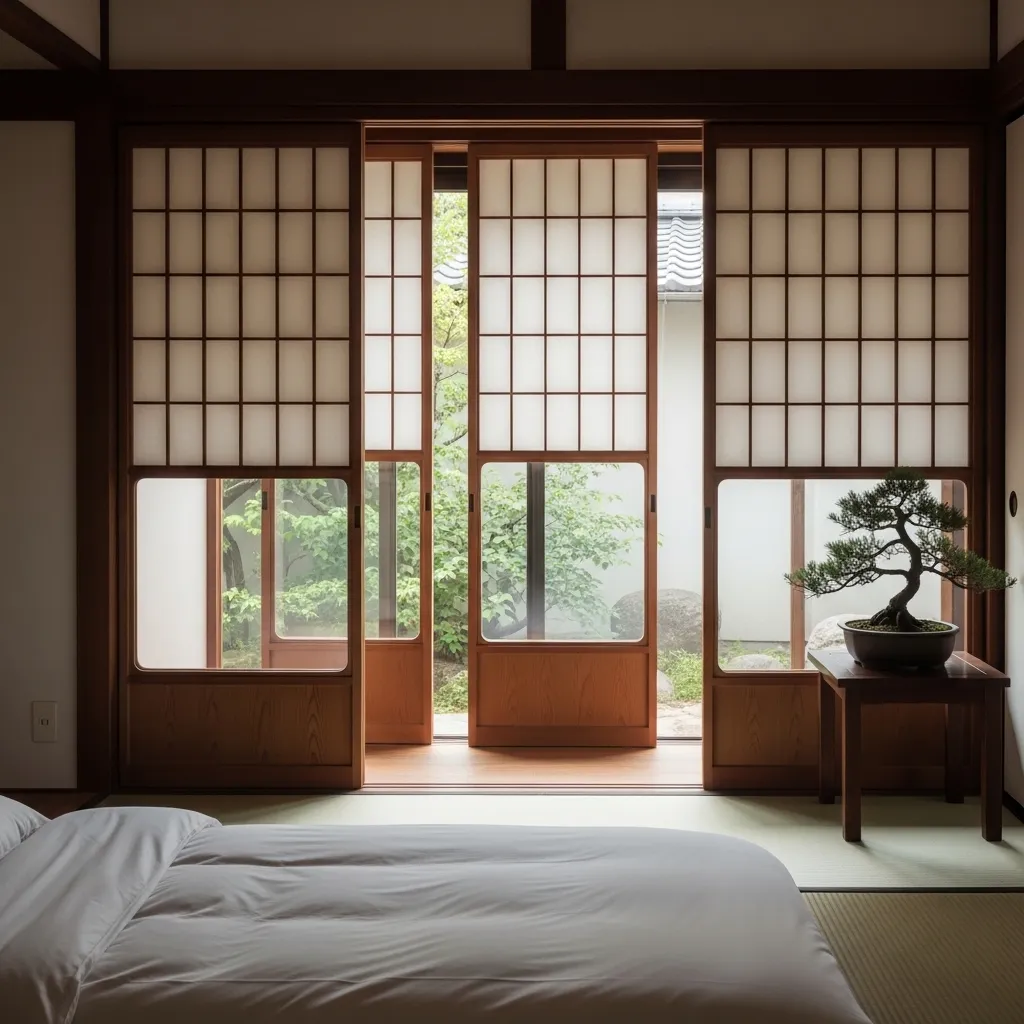
6. Choose a Neutral, Earthy Color Palette
My color inspiration comes from nature. Think of shades of sand, stone, moss, and soft grey. A base of white or cream walls acts like a canvas, allowing the textures of wood and fabric to stand out.
I add subtle color through a single piece of art, a textured throw, or a small ikebana flower arrangement. The overall effect is soothing and cohesive, never jarring to the senses.
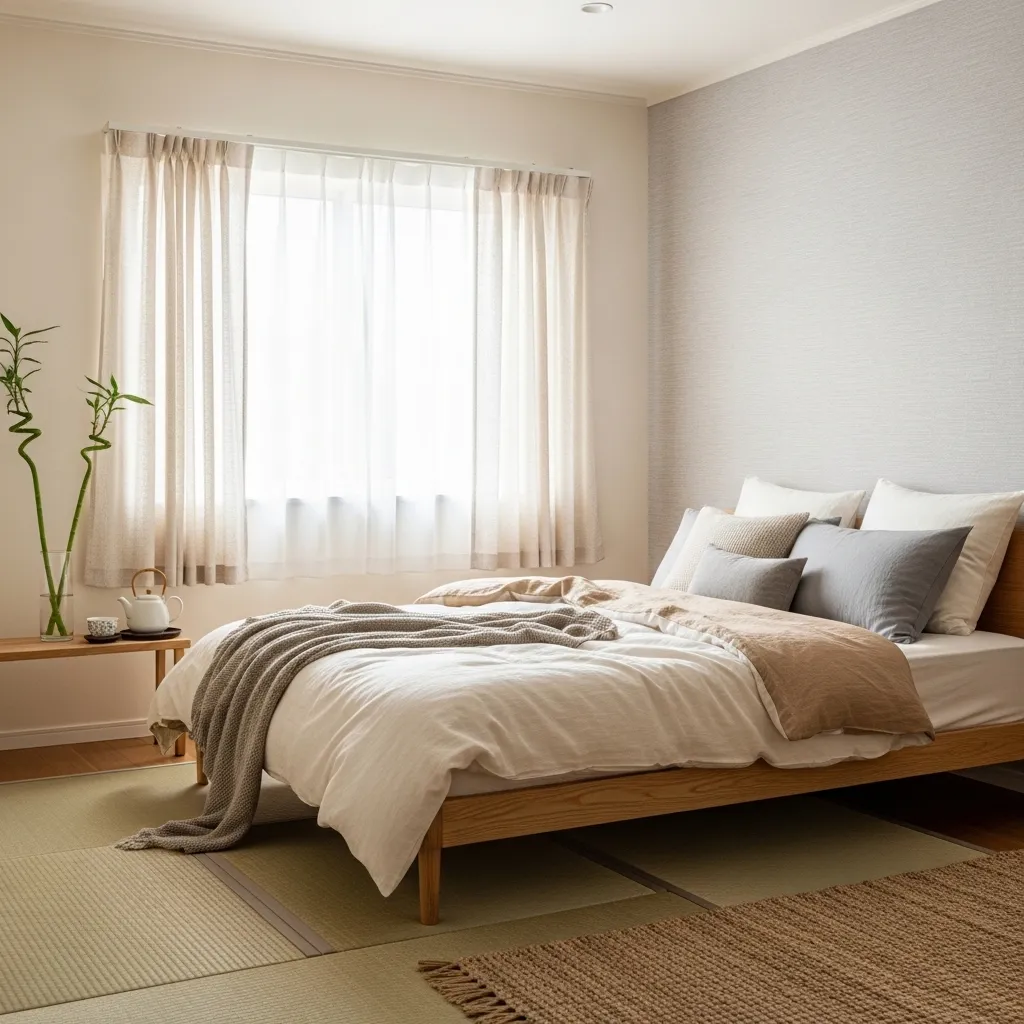
7. Add Texture with Natural Fibers
To keep a neutral room from feeling flat, layer textures. I use linen or cotton for bedding, a woven bamboo blind, a rough hemp rug, or a soft wool throw.
These natural materials add depth and interest. They feel good to touch and age gracefully, embracing that wabi-sabi philosophy where slight imperfections tell a story.
8. Create a Dedicated Tokonoma Alcove
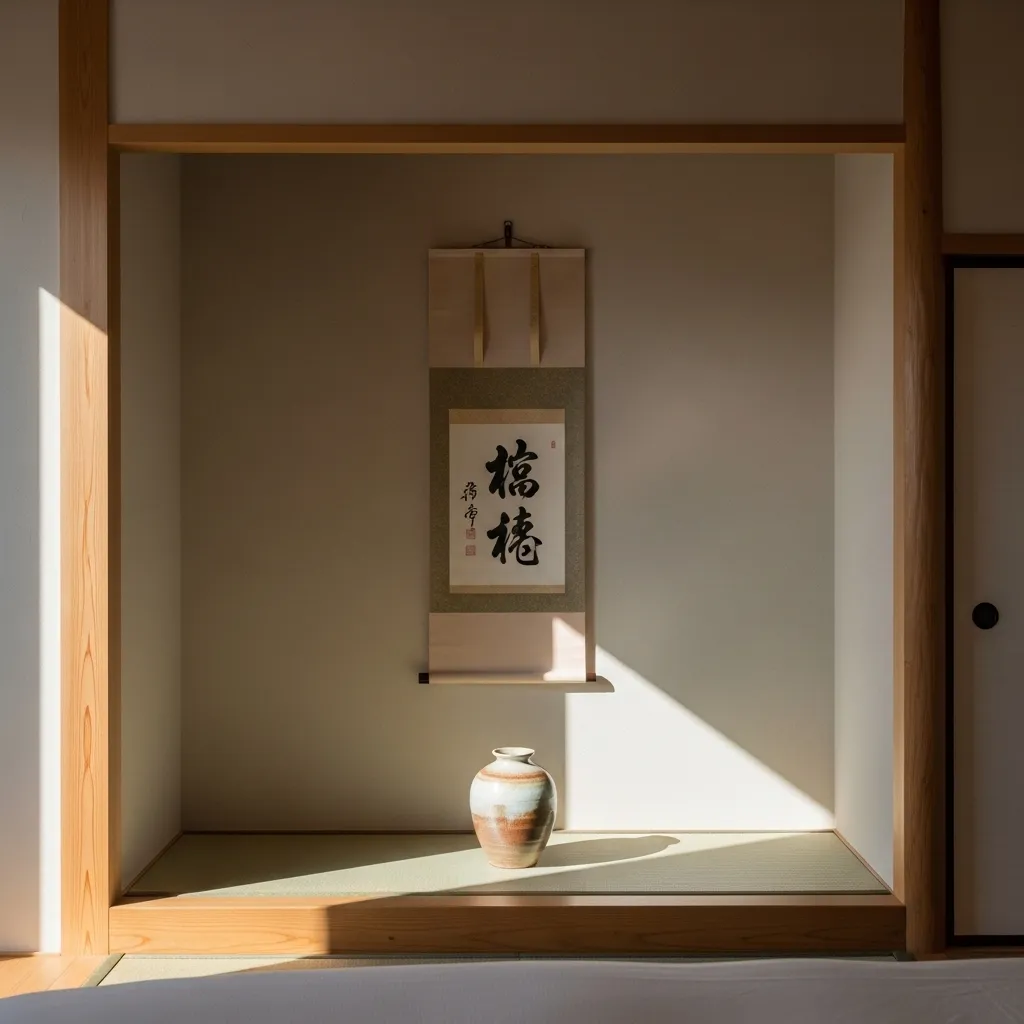
A tokonoma is a small, raised alcove for displaying art or a seasonal object. It’s a focal point for contemplation. You don’t need to rebuild a wall to create one.
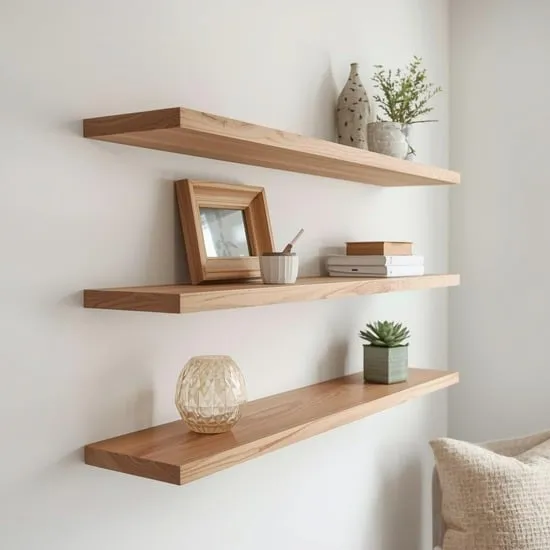
I designated a simple shelf or a clean corner of the room. I place a single scroll, a ceramic vase with a branch, or a beautiful stone there. It becomes a mindful spot that anchors the room’s serene vibe.
9. Implement Soft, Layered Lighting
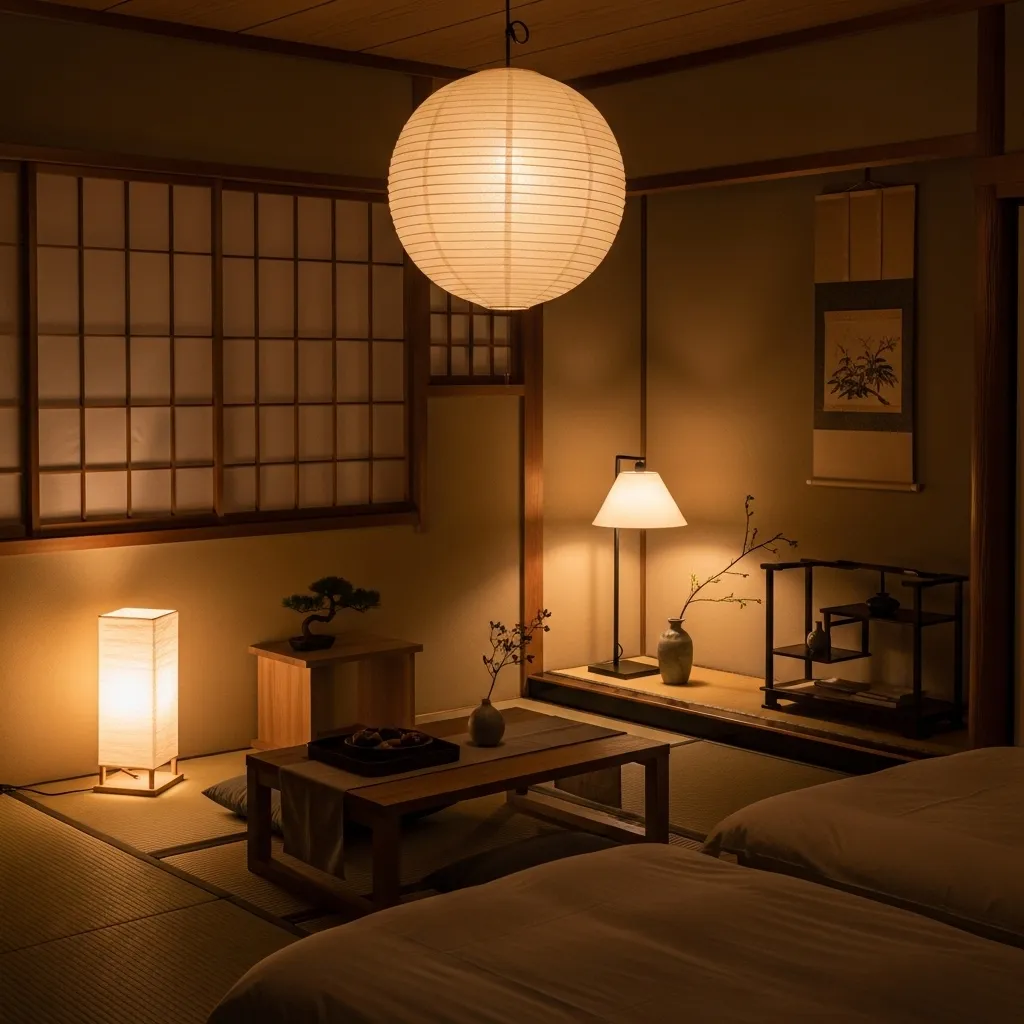
Harsh overhead lights are the enemy of zen. I use multiple soft light sources. A paper lantern (washi or shoji style) gives a beautiful ambient glow.
I add a small reading lamp with a bamboo shade and maybe some discreet LED strips under the platform bed. The key is to have lighting you can adjust to create a peaceful, cocoon-like atmosphere at night.
10. Incorporate a Small Zen Garden
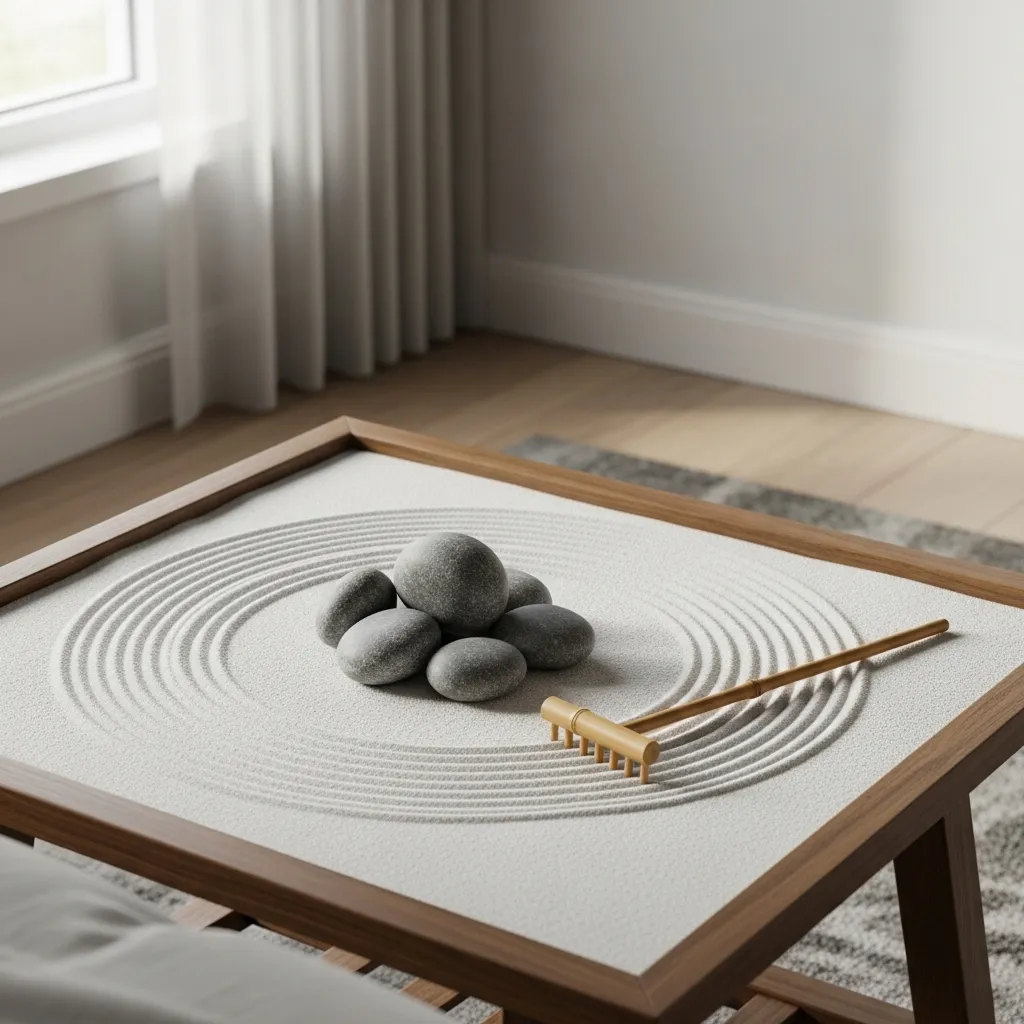
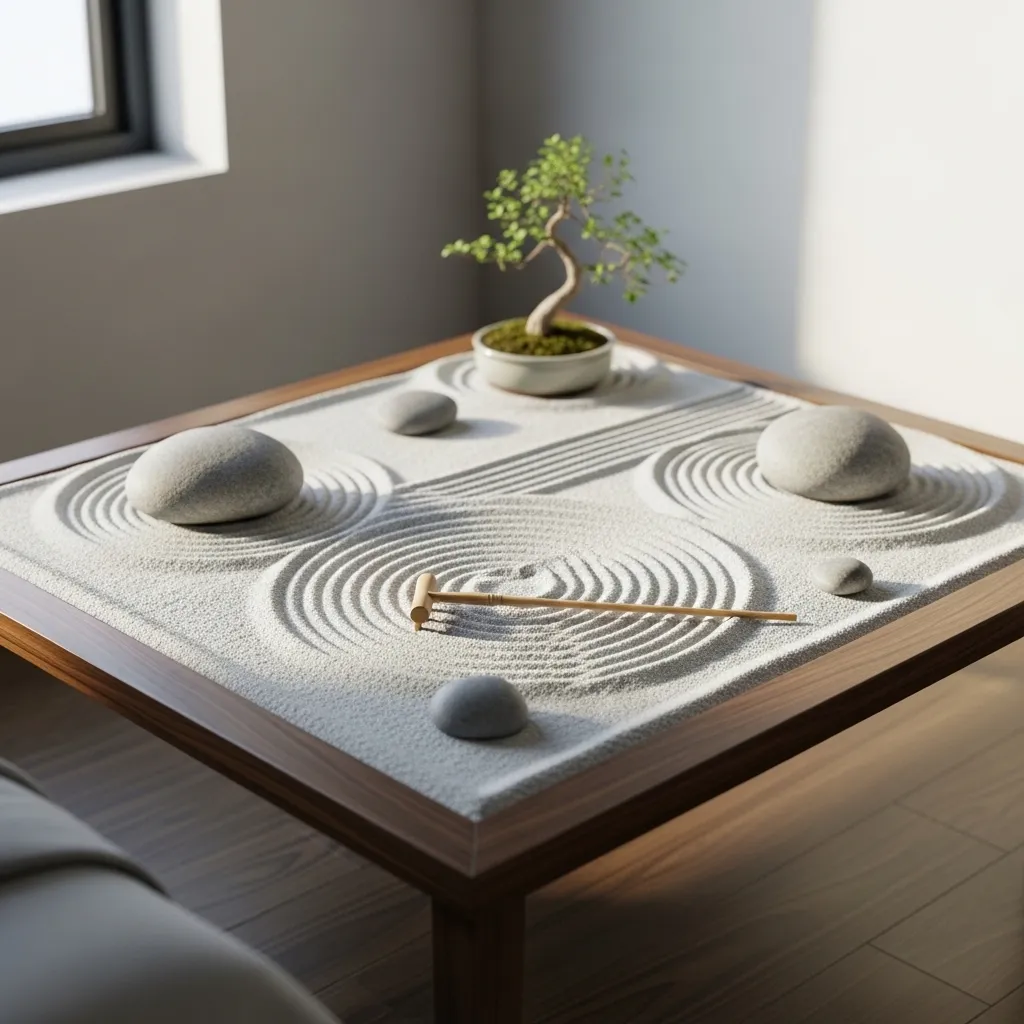
Bringing a piece of the garden inside is deeply calming. A small tabletop karesansui (dry rock garden) with sand, a few stones, and a miniature rake is perfect for a bedside table or shelf.
Raking the sand is a meditative act. If that feels too literal, a simple shallow bowl with moss and a single, interesting rock can have the same grounding, minimalist effect.
11. Select Simple, Functional Furniture
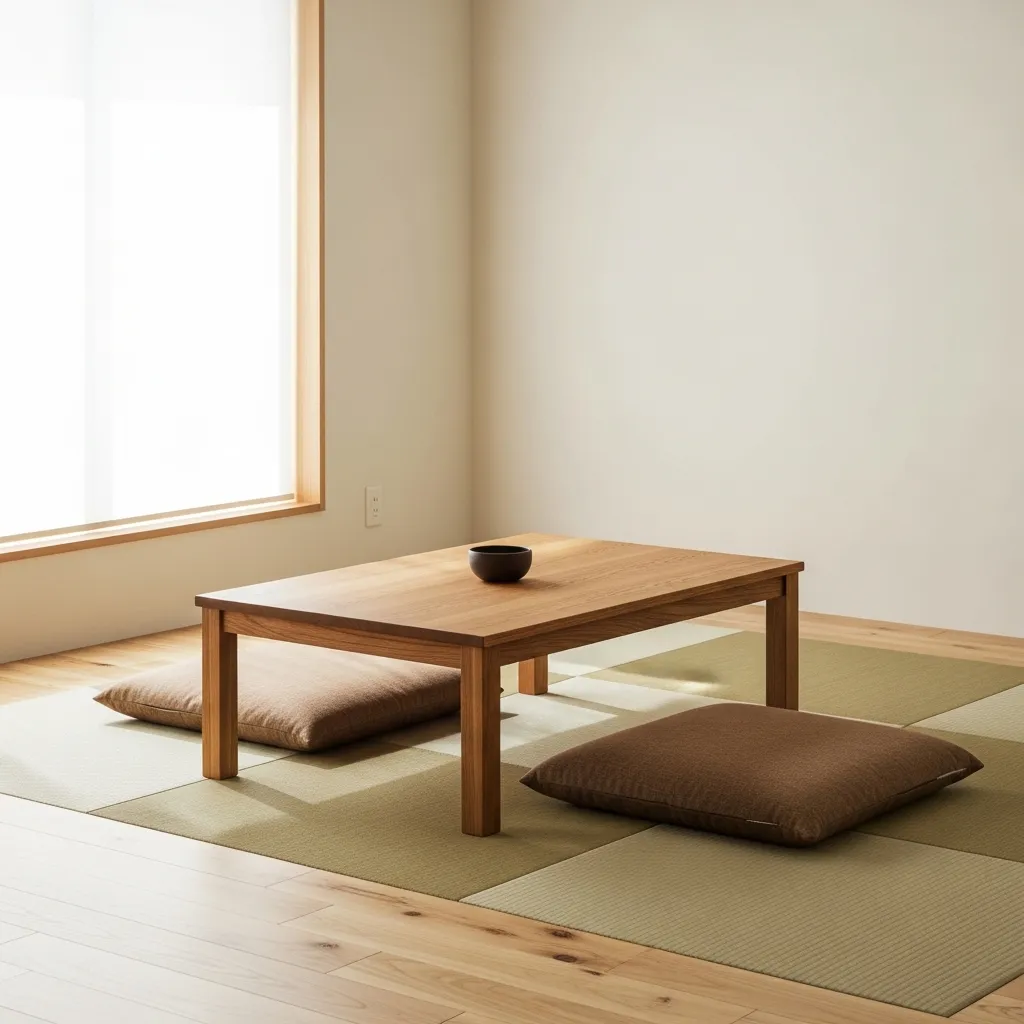
Every piece of furniture should have a clear purpose and a simple form. Think low wooden tables (chabudai), floor cushions (zabuton), and storage chests with clean lines.
I avoid ornate carvings or complicated designs. The beauty is in the craftsmanship and the material itself. Furniture is often low to maintain an open, airy feeling in the room.
12. Embrace the Beauty of Empty Space (Ma)
This is the final, most profound touch. Ma is the conscious appreciation of empty space. It’s the pause between notes. In a bedroom, it means not filling every corner.
I leave a wall bare, allow for a clear floor area, or have a wide, empty space around my bed. This emptiness isn’t lacking; it’s full of potential and peace. It allows the room, and your mind, to breathe.
Conclusion
Creating a Japanese-style bedroom transformed my space into a true sanctuary. It’s not about strict rules, but about choosing simplicity, nature, and intention. Start with one element you love—maybe clearing the clutter or adding a tatami rug—and let the calm unfold from there. Your peaceful retreat awaits.
FAQ
Q: Can I create a Japanese-style bedroom in a small space?
A: Absolutely! Japanese design is perfect for small rooms. The focus on minimalism, multi-functional furniture, and clean lines actually makes a small space feel larger and more open.
Q: What is the main color scheme for a Japanese bedroom?
A> Stick to a neutral, earthy palette. Whites, creams, soft grays, and beiges form the base, accented with the natural tones of wood, bamboo, and maybe a hint of black or moss green for depth.
Q: Is it expensive to achieve this look?
A> Not at all. The philosophy encourages using what you have mindfully. Start by decluttering, then add key pieces like a simple platform bed frame, natural fiber bedding, and a paper lantern lamp over time.
Q: What’s the difference between Japanese and Scandinavian (Japandi) style?
A> They share minimalism and natural materials. Japanese style leans more into traditional elements (tatami, shoji) and darker woods, while Japandi blends in lighter Scandinavian woods, more textiles, and a cozier “hygge” feel.
Q: Can I have plants in a Japanese-style bedroom?
A> Yes, but choose thoughtfully. A single, elegant bonsai tree, a simple bamboo plant, or an ikebana arrangement is perfect. The idea is a curated, natural accent, not a jungle of plants.