13 Smart One Room Apartment Ideas That Feel Bigger & Better

Living in a one-room apartment is a masterclass in creativity. I’ve been there—where your bed, living room, and dining area all exist in one breath. At first, it felt limiting, but I quickly learned it’s an incredible opportunity to design a space that’s uniquely efficient and full of personality.
The secret isn’t just about saving space; it’s about making every square foot work harder and feel intentional. It’s about choosing pieces that multitask and layouts that flow. Forget the cramped studio stereotype. With a few smart tweaks, your one room can become your favorite cozy, functional sanctuary.
Here are my 13 favorite, tried-and-true ideas to transform your single-room space from chaotic to curated, without sacrificing an ounce of style.
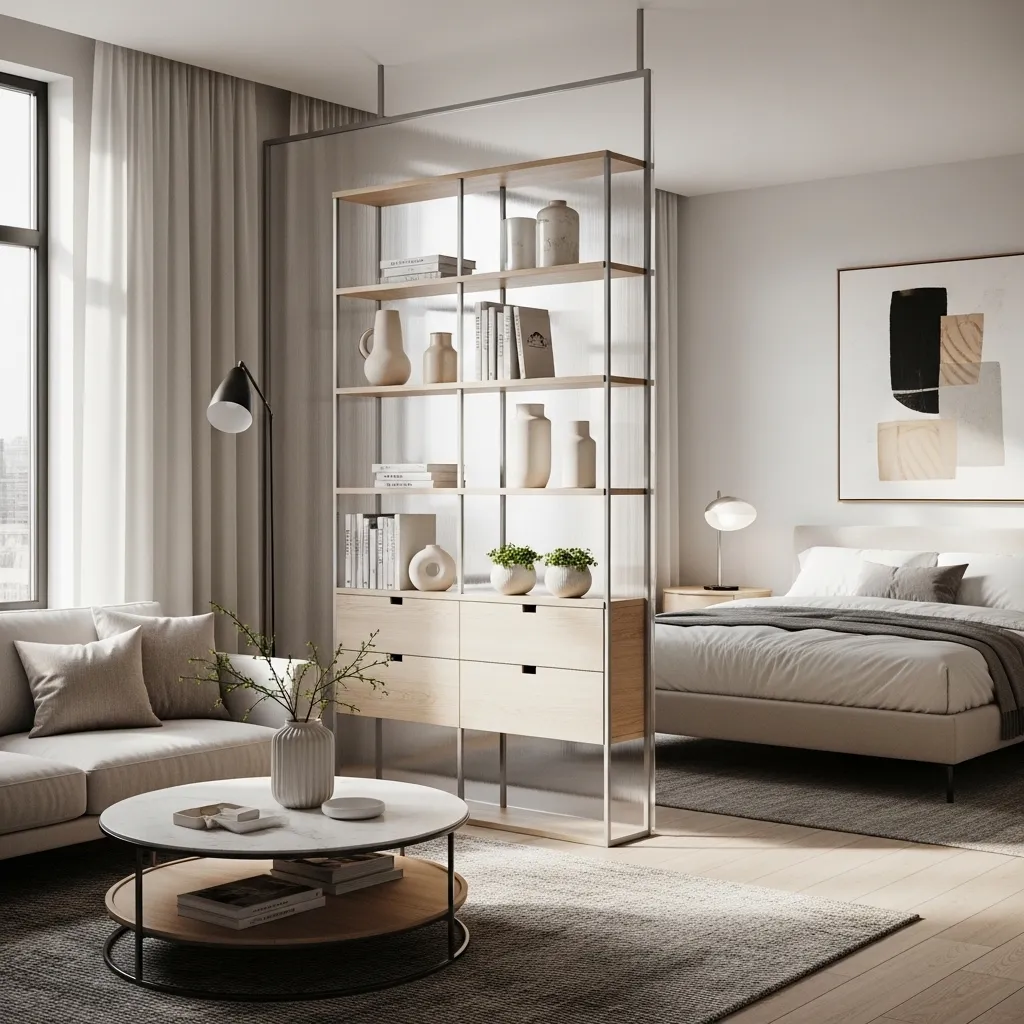
1. Define Zones with a Room Divider
An open floor plan can feel too open. The first thing I did was create visual “rooms” within my room. You don’t need a permanent wall. A tall, open bookshelf acts as a perfect divider, offering storage while separating my sleeping area from my living space.
Other great options include a stylish folding screen, a curtain hung from the ceiling, or even a large area rug to anchor a specific zone. This simple trick instantly makes the space feel more organized and purposeful.
2. Embrace a Lofted Bed
If your ceilings allow, going vertical is a game-changer. Lifting your bed creates a whole new world of usable space underneath. I’ve seen friends turn this into a cozy reading nook, a compact home office, or even a dedicated dressing area.
It completely frees up the floor for daytime activities. A loft bed makes your apartment feel like it has two distinct levels, effectively doubling your functional square footage.
[[IMG:IMG:IMG03]]
3. Invest in a Sleeper Sofa
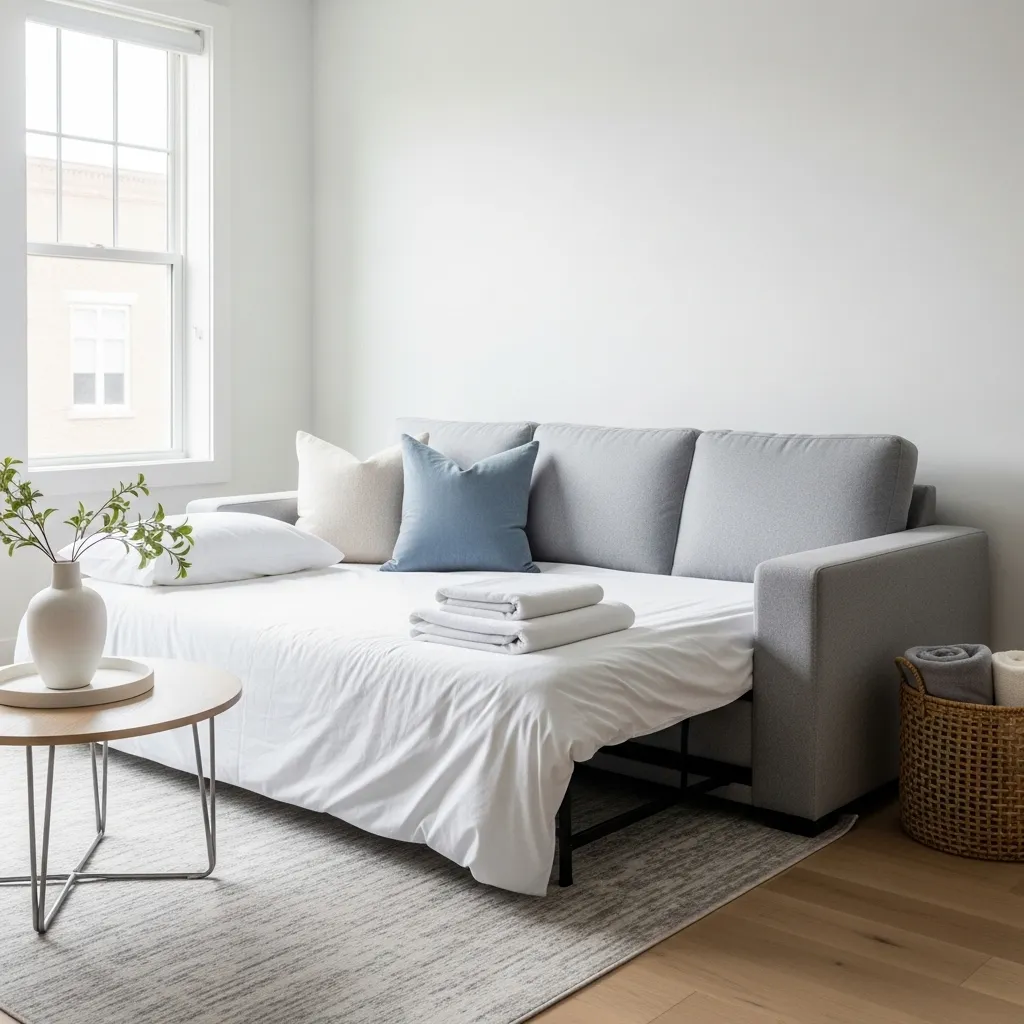
Your largest piece of furniture should earn its keep. A comfortable, stylish sleeper sofa is the ultimate multitasker for a studio. It serves as your living room by day and seamlessly transforms into a guest room by night.
Modern options are so much better than the clunky pull-outs of the past. Look for one with built-in storage for extra pillows and blankets to maximize its utility.
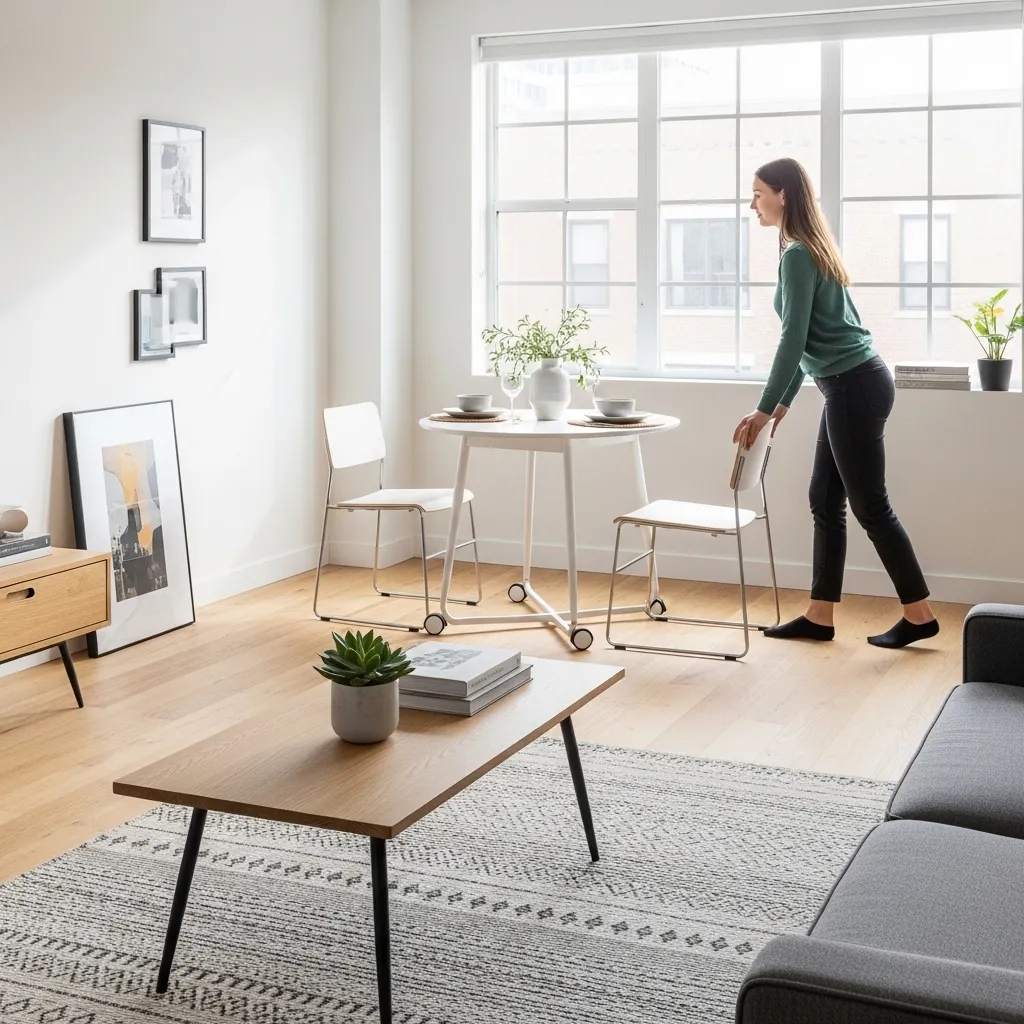
4. Choose Furniture on Wheels
Flexibility is key in a small space. I swear by furniture that can move. A rolling kitchen island can be a prep station, dining table, and bar cart. A small, mobile side table can be pulled wherever you need it—next to the sofa for coffee or by the window for plants.
This mobility lets you reconfigure your layout in seconds for different activities, from solo dining to hosting friends.
5. Go Big with Mirrors
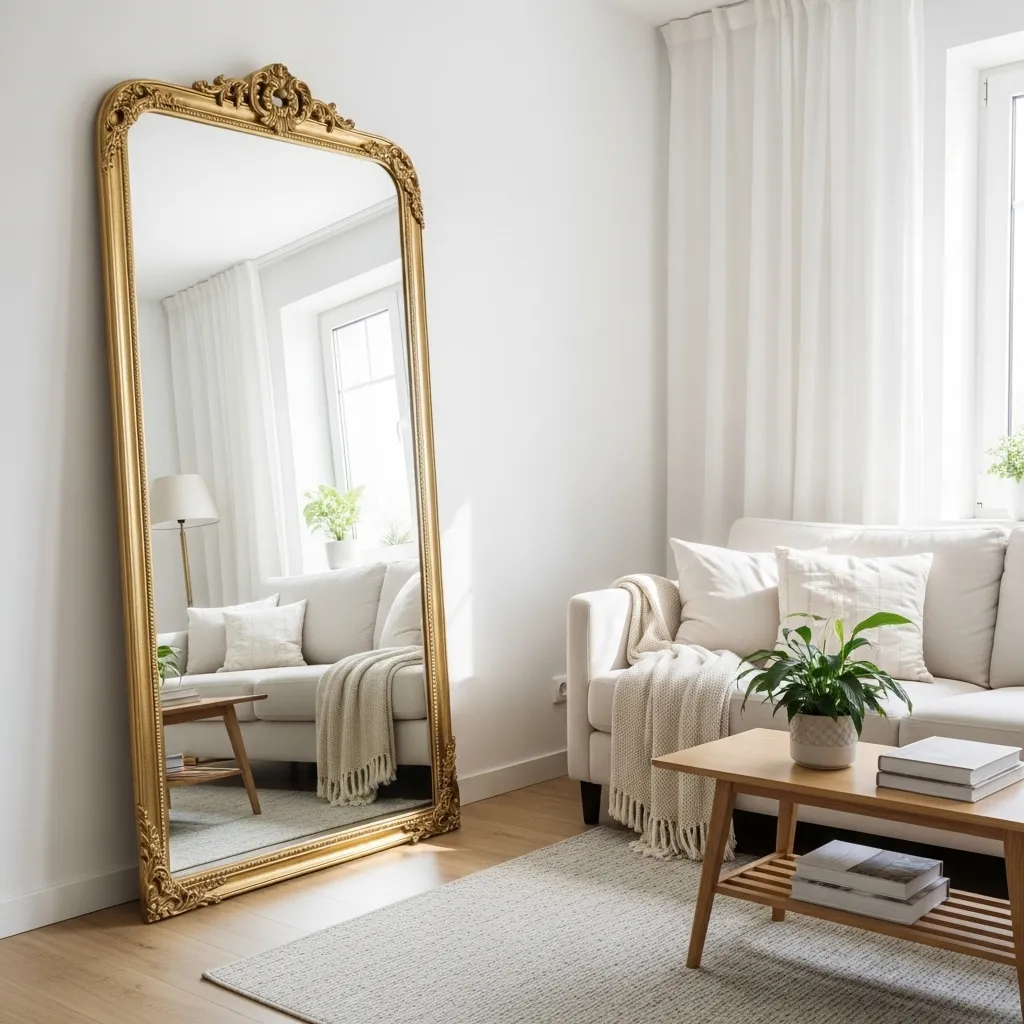
This is the oldest trick in the book because it works. Strategically placing a large mirror opposite a window reflects natural light and the view, making the entire room feel twice as large and airy.
I used a leaning floor mirror to create depth in a dark corner. Mirrored furniture, like a console table, also helps bounce light around without being too obvious.
6. Opt for Dual-Purpose Everything
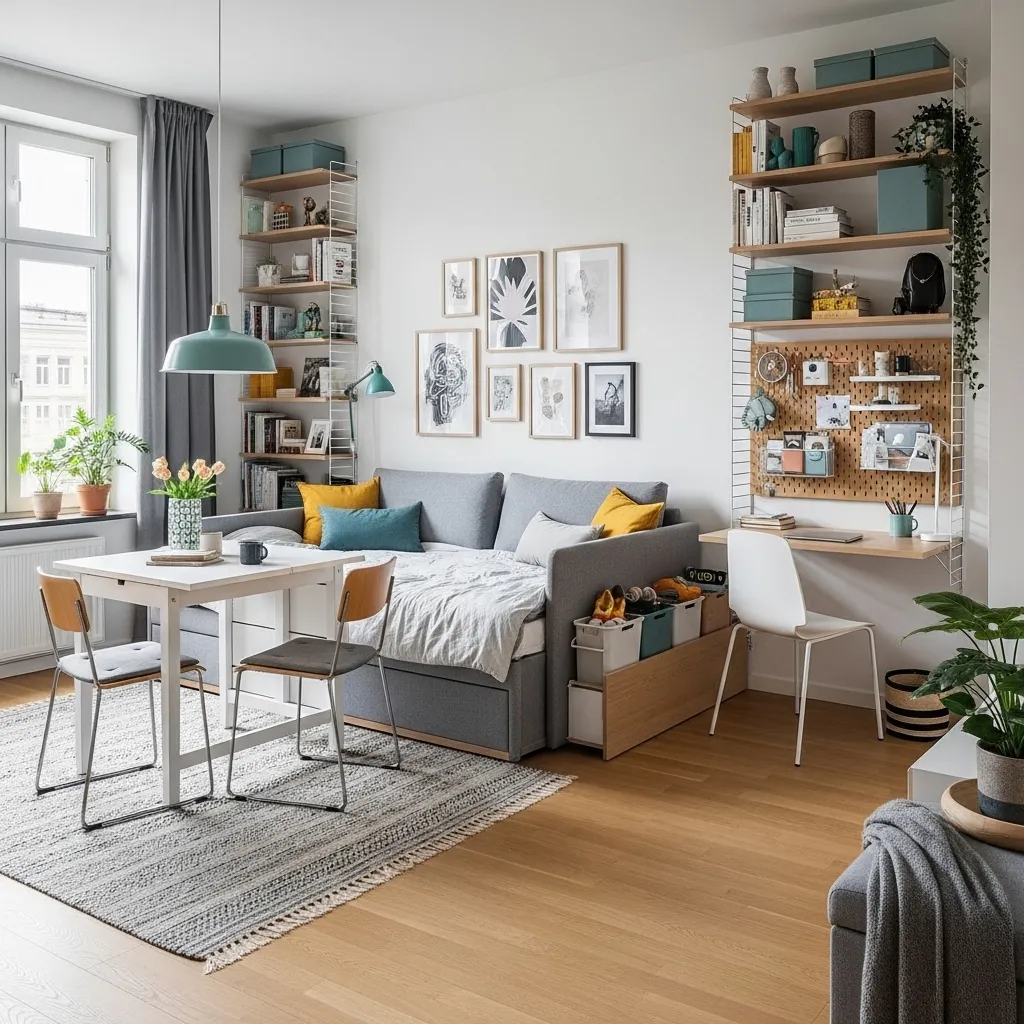
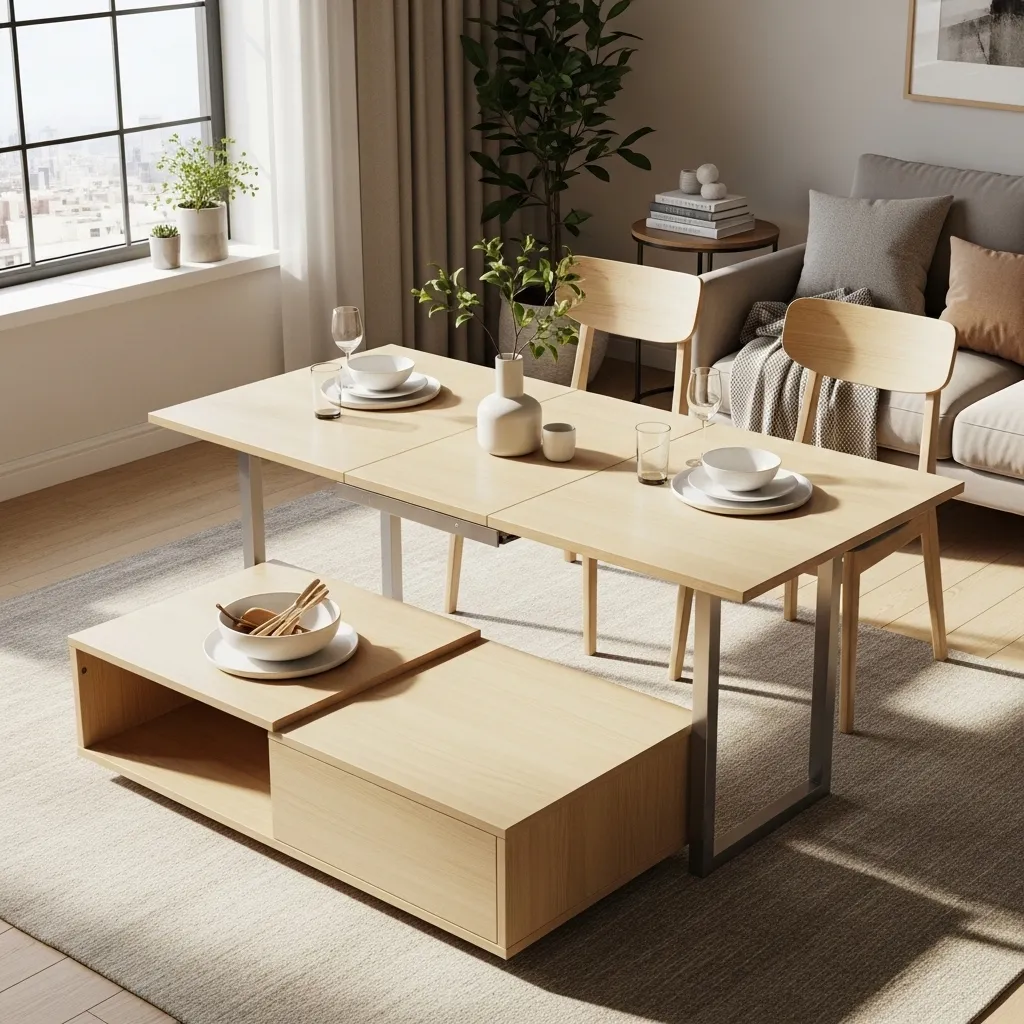
Scrutinize every potential purchase. Does it do more than one thing? My favorite finds include: an ottoman with hidden storage inside, a dining table that folds down from the wall, and a bed frame with deep drawers underneath.
Think: storage stools, nesting tables, and benches that open up. When everything has a secret superpower, clutter disappears.
7. Utilize Vertical Wall Storage
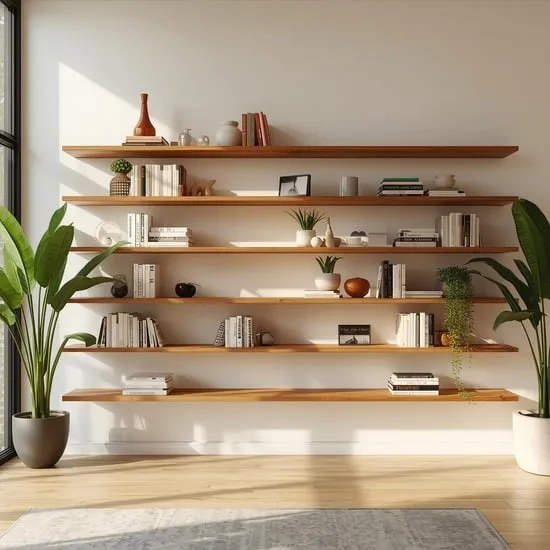
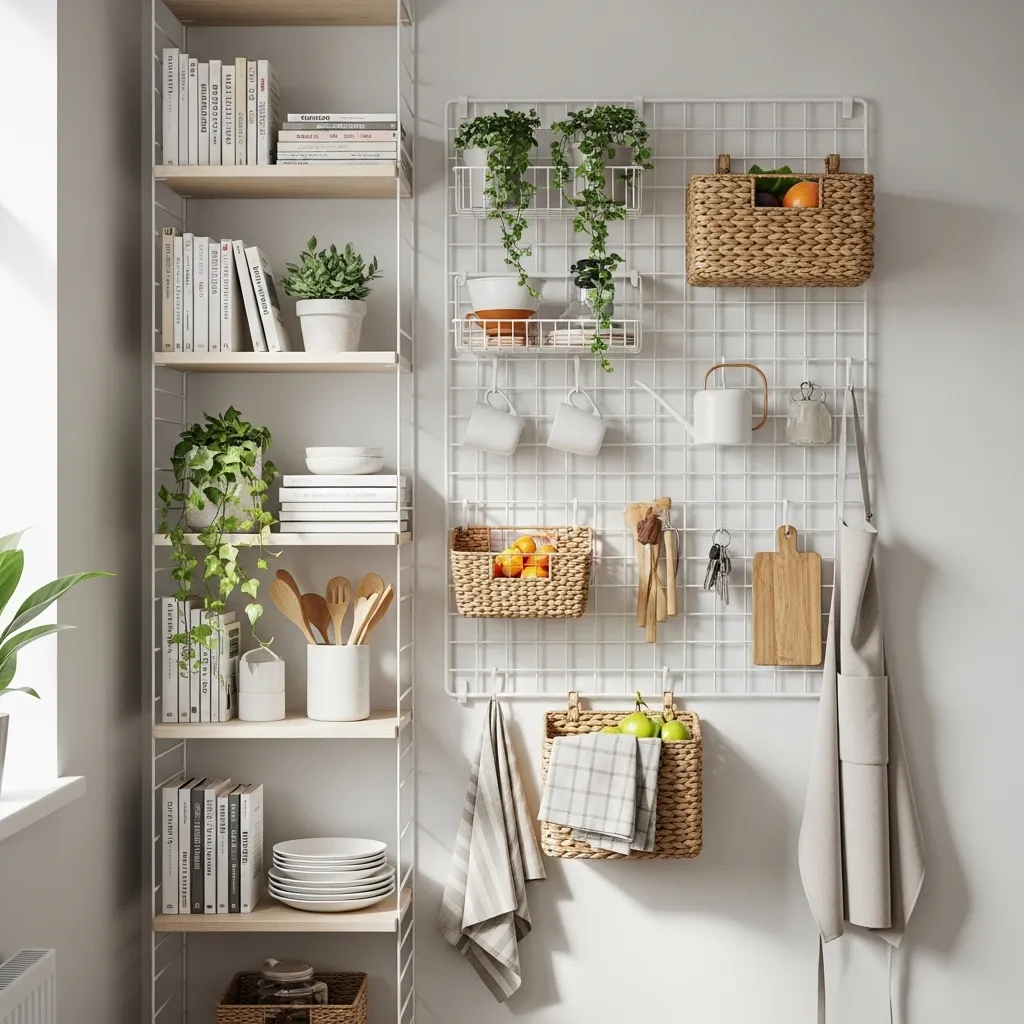
Floor space is precious, so look up! Walls are your best friend. Install floating shelves for books and decor. Use a pegboard in the kitchen or entryway for utensils and keys. Mount your TV to free up the console below.
I even used a vertical shoe organizer on the back of my door. Getting things off the floor and onto the walls creates a cleaner, more open feel instantly.
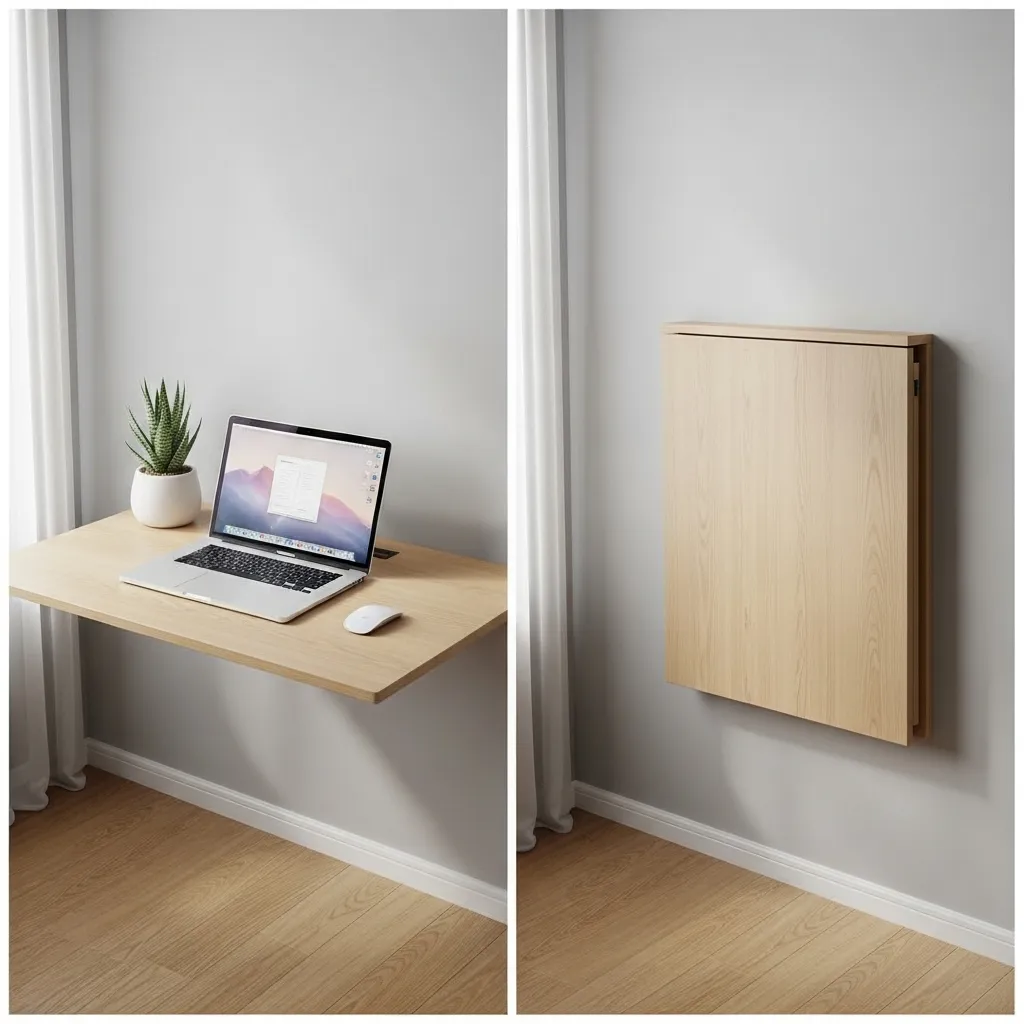
8. Create a Fold-Down Workspace
A dedicated home office in a studio can seem impossible. My solution was a wall-mounted, fold-down desk. It’s just a beautiful slab of wood that folds flat against the wall when not in use.
Pair it with a wall-mounted shelf above for supplies. When you’re done working, simply fold it up, and your “office” vanishes, leaving your living space completely clear.
9. Stick to a Cohesive Color Palette
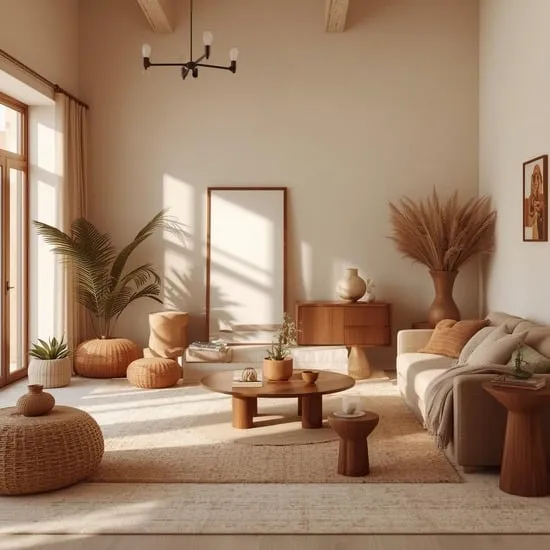
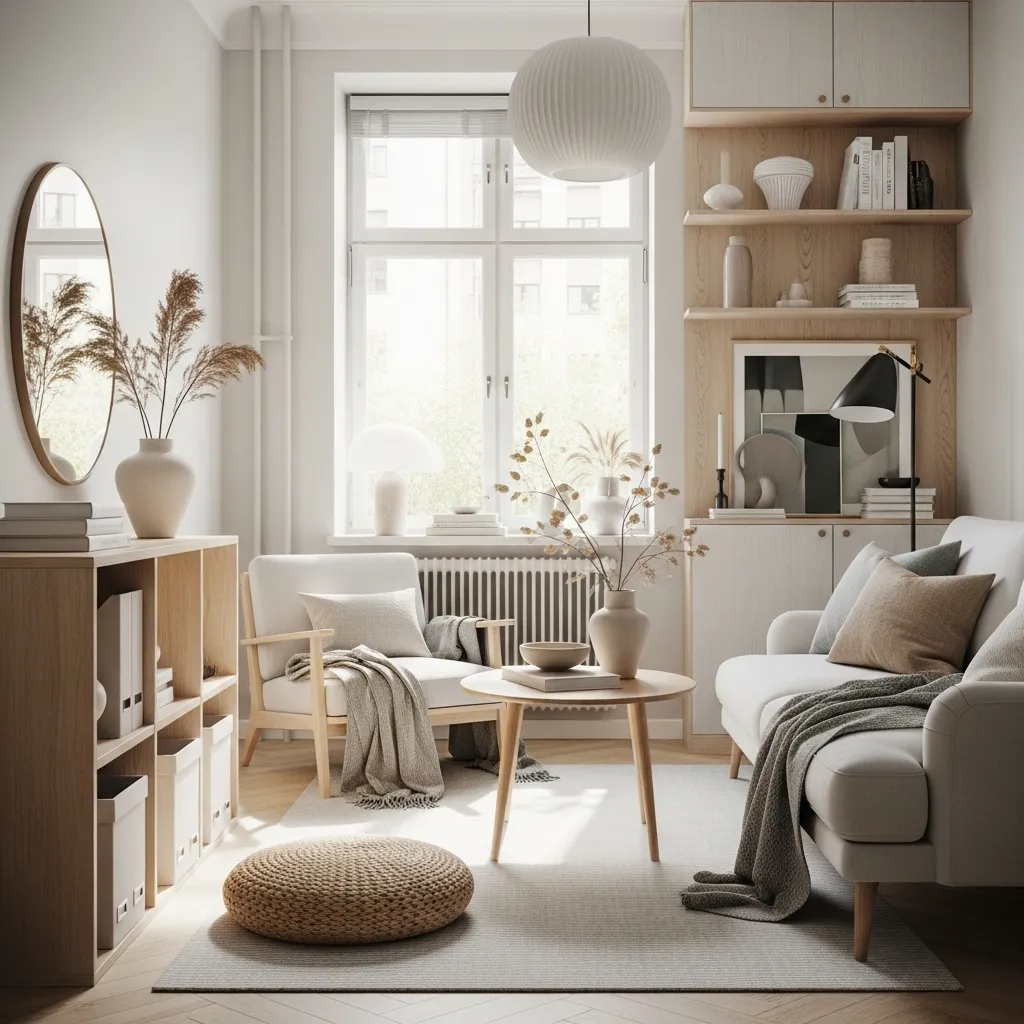
Too many colors can visually chop up a small space. I chose a light, neutral base (like soft whites, beiges, or light grays) for walls and big furniture, then added pops of color through accessories like pillows, art, and a single accent chair.
A monochromatic or tonal scheme helps the eye flow smoothly from one zone to another, creating a sense of harmony and spaciousness.
10. Hide the Bed with a Daybed Setup
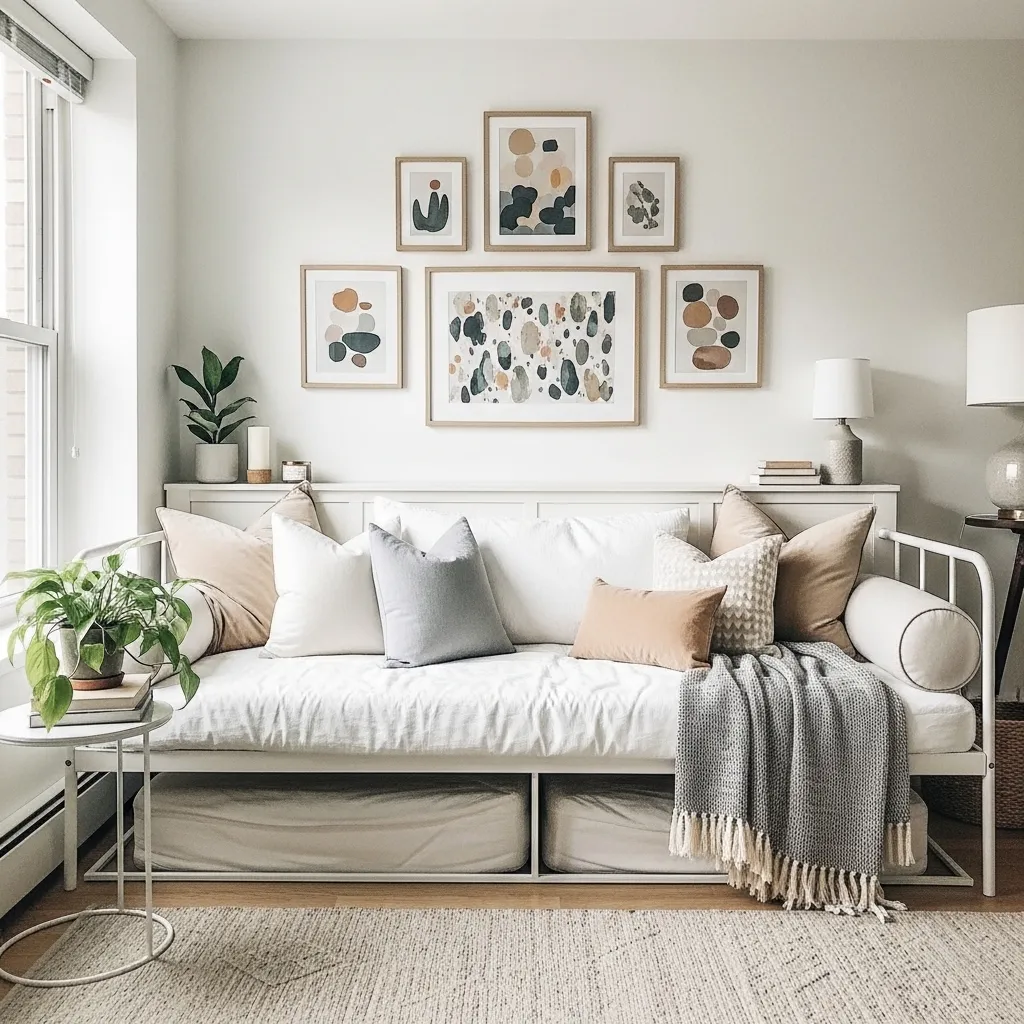
If a loft isn’t an option, disguise your bed. Make it look like a stylish sofa during the day. Use a daybed frame or prop your mattress against the wall with a mountain of plush pillows and a throw blanket along the back.
This transforms your sleeping area into a chic lounge spot, so your room never screams “bedroom” when you’re entertaining.
11. Use Rugs to Anchor Each Zone
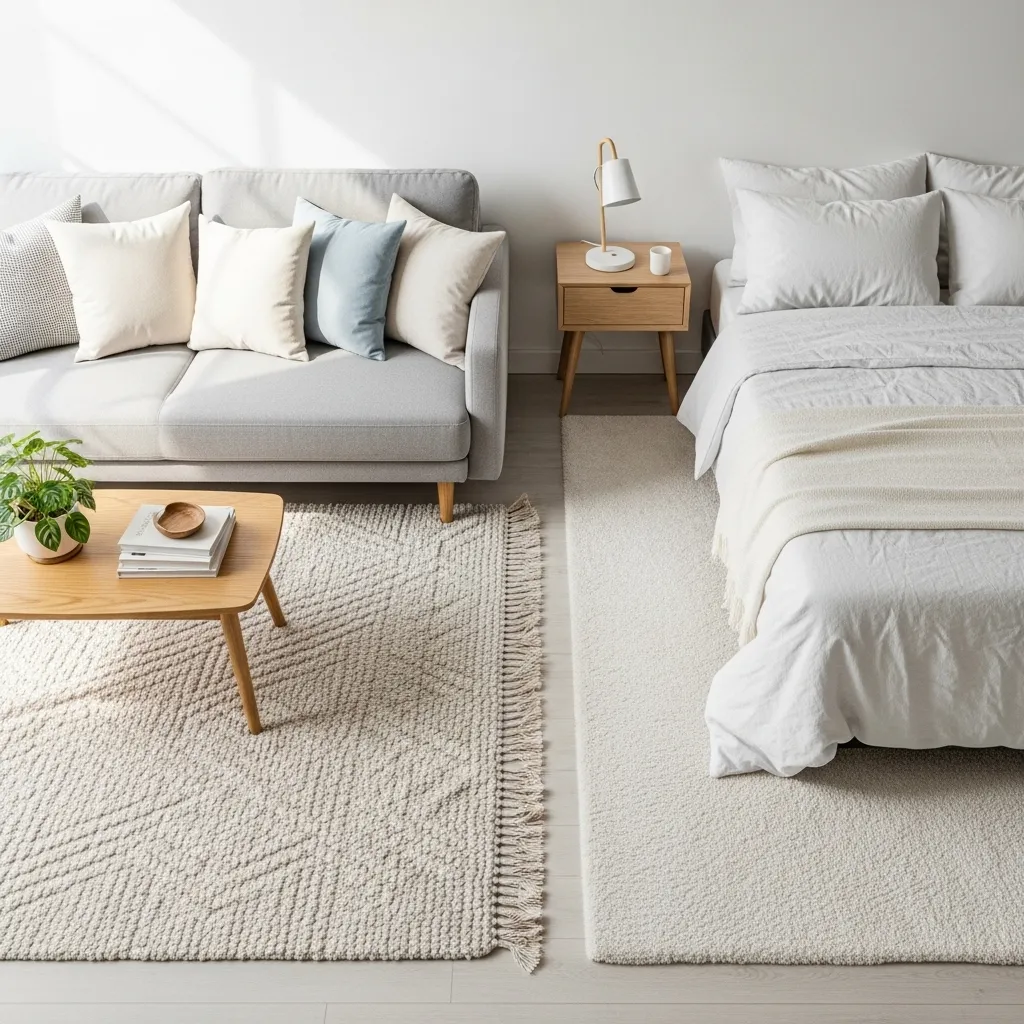
Even without walls, you can define areas with texture underfoot. I use a plush rug under my bed “zone” and a flat-weave jute rug under my living area. The different textures and patterns subconsciously tell you where one area ends and another begins.
Just make sure the rugs are proportional to the zones—not too small—to keep the look intentional.
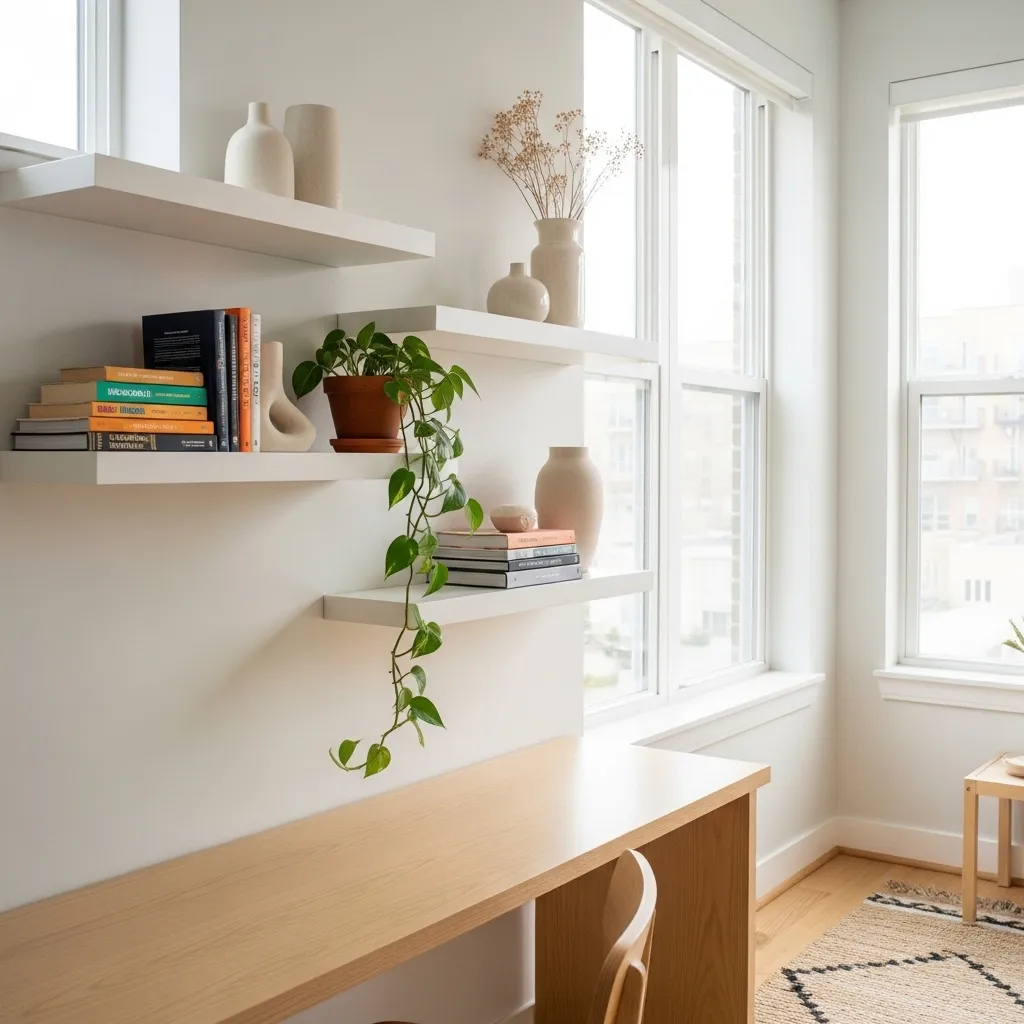
12. Install Strategic Open Shelving
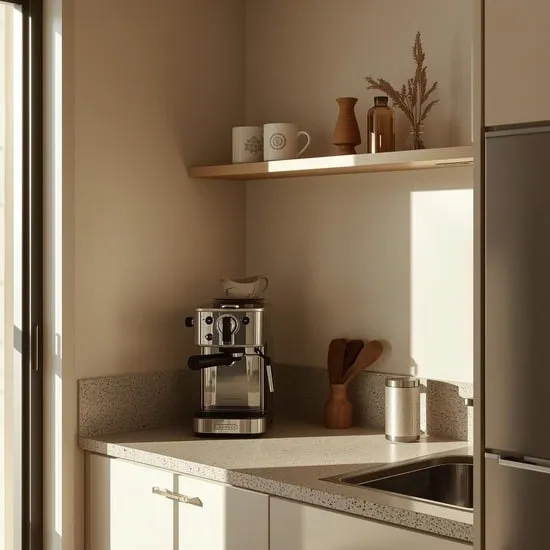
Closed storage can sometimes feel heavy. Open shelving, especially in a kitchen or living area, keeps the vibe airy. It forces you to curate and display your prettiest items—nice dishes, glassware, or favorite books.
It acts as both storage and decor. To avoid clutter, I stick to a “less is more” approach and group items thoughtfully.
13. Let in Maximum Light
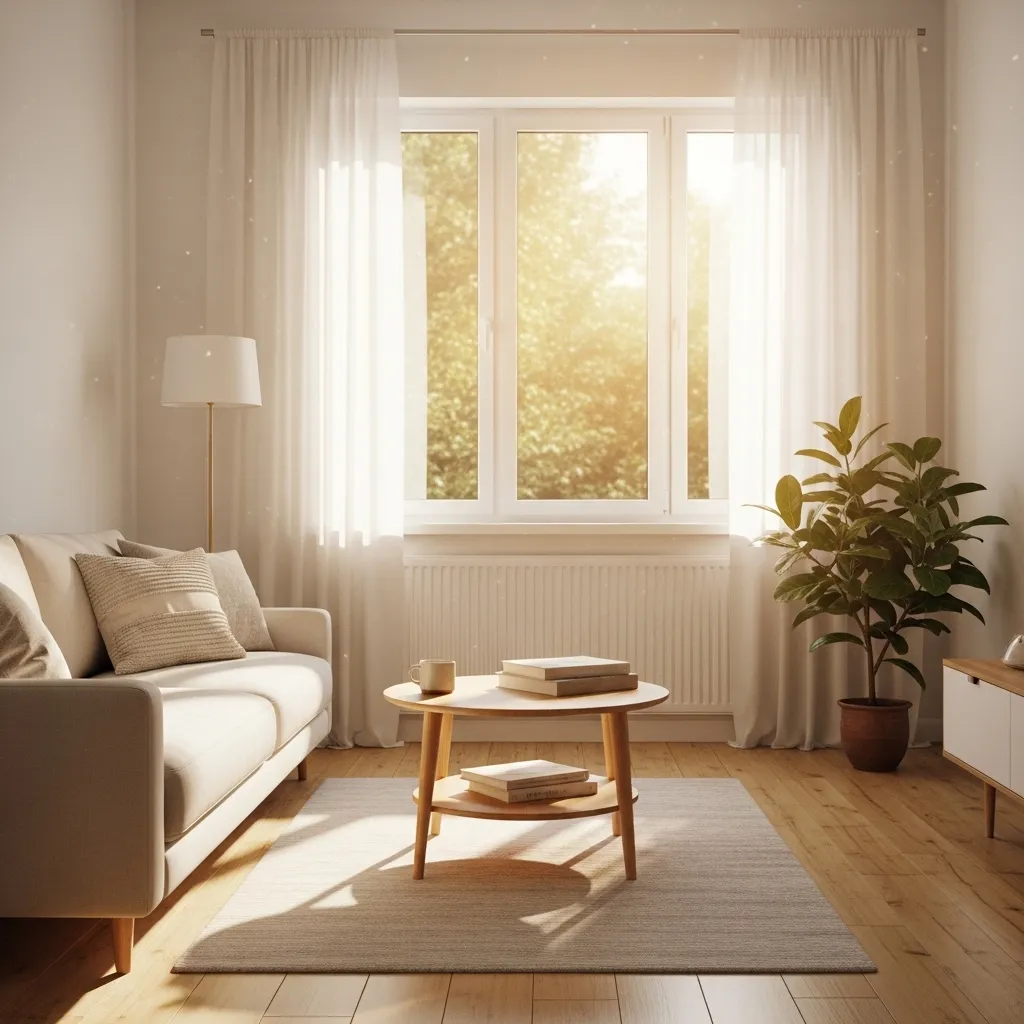
Nothing opens up a space like great light. I use sheer, light-filtering curtains instead of heavy drapes to soften the window without blocking sun. I also rely on layers of lighting: overhead for general light, a floor lamp for reading, and small table lamps for ambient glow.
A well-lit room feels bigger and more inviting at all hours. Don’t block your windows with furniture—let that light flood in.
Your Cozy, Functional Sanctuary Awaits
Transforming a one-room apartment is all about smart choices, not big renovations. By focusing on multifunctional furniture, clear zoning, and light-enhancing tricks, you can create a space that feels both spacious and deeply personal. Start with one or two ideas that excite you most, and build from there. Your efficient, beautiful home is completely within reach.
Small Studio FAQ
Q: What’s the biggest mistake people make in a studio apartment?
A: Using furniture that’s too large and bulky. It’s crucial to scale your pieces to the room. Choose a loveseat instead of a full sofa, and opt for armless chairs that take up less visual space.
Q: How can I add storage without it looking messy?
A: Use decorative baskets and bins on open shelves or under furniture. They corral items like remotes, magazines, or extra linens while looking stylish and cohesive.
Q: Can I really have a dining area in a tiny studio?
A: Absolutely! Look for a small drop-leaf table that attaches to the wall, or use a wide windowsill as a bar-height dining spot for two. Stools that tuck completely underneath are key.
Q: What colors are best for making a small space look bigger?
A: Light, reflective colors like soft whites, pale grays, and muted pastels are best for walls and large furniture. You can always add depth and personality with darker or brighter colors in rugs, art, and accessories.
Q: How do I deal with closet space that’s basically non-existent?
A: Get creative outside the closet. Use a freestanding clothing rack for in-season favorites, install hooks on the wall for bags and jackets, and use the back of doors for hanging organizers. It becomes part of the decor!